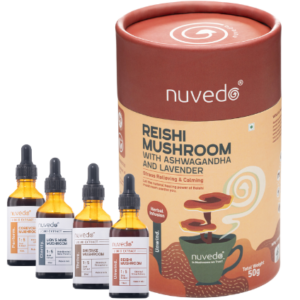


Know Your Mushroom
More than food. More than a supplement.
Mushrooms have been part of human diets and traditional medicine for centuries. Modern research is helping us understand the compounds that make them interesting, from beta-glucans and polysaccharides to triterpenes and specialised fungal metabolites.
But the mushroom itself is only part of the story.
The species, strain, growing conditions, part of the mushroom used and extraction method all influence what goes into an extract.
At Nuvedo, we work with cultivated fruiting bodies and control the journey from culture to cultivation to extraction. We believe that understanding what goes into a product is just as important as understanding what it is meant for.
Lion’s Mane
The mushroom of curiosity.
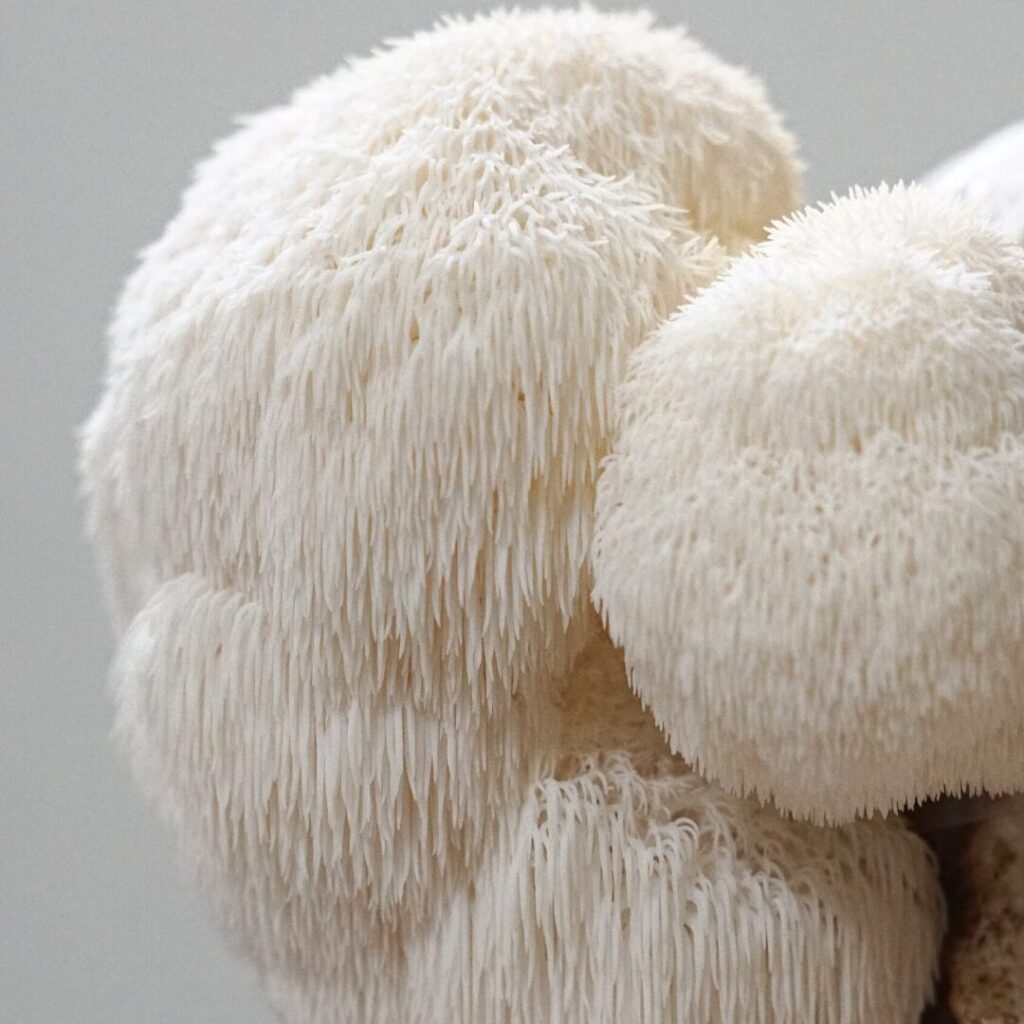
Hericium erinaceus
Lion’s Mane is a distinctive mushroom with a long history of culinary and traditional use. It has also attracted considerable scientific interest for its potential role in neurological health and cognitive function.
Two groups of compounds frequently discussed in Lion’s Mane research are hericenones and erinacines. Hericenones are associated primarily with the fruiting body, while erinacines have been studied mainly in the mycelium.
Research into these compounds has explored their relationship with nerve growth factor, neuronal health and processes involved in healthy ageing. Human studies of Lion’s Mane are still developing, and the findings do not establish that consuming an extract will improve cognition or treat a neurological condition.
What’s inside?
- Terpenes
- Beta-glucans
- Other naturally occurring fungal compounds
Why the fruiting body matters
Our Lion’s Mane extracts are made from whole fruiting bodies. This means we work with the part of the mushroom that contains naturally occurring hericenones and a range of other fungal compounds.
We do not add mycelial biomass or grain fillers to our fruiting-body extracts.
The Nuvedo approach
We cultivate our mushrooms from selected cultures and use ultrasound-assisted extraction as part of our process to recover compounds from the fruiting body.
The result is a concentrated liquid extract made from the mushroom itself.
Read the science
Valu et al. “Optimization of Ultrasonic Extraction to Obtain Erinacine A and Polyphenols with Antioxidant Activity from the Fungal Biomass of Hericium erinaceus.” Foods (2020).
DOI: 10.3390/foods9121889
Roda et al. “Neuroprotective Metabolites of Hericium erinaceus Promote Neuro-Healthy Aging.” International Journal of Molecular Sciences (2021).
DOI: 10.3390/ijms22126379
Reishi
The mushroom of balance.
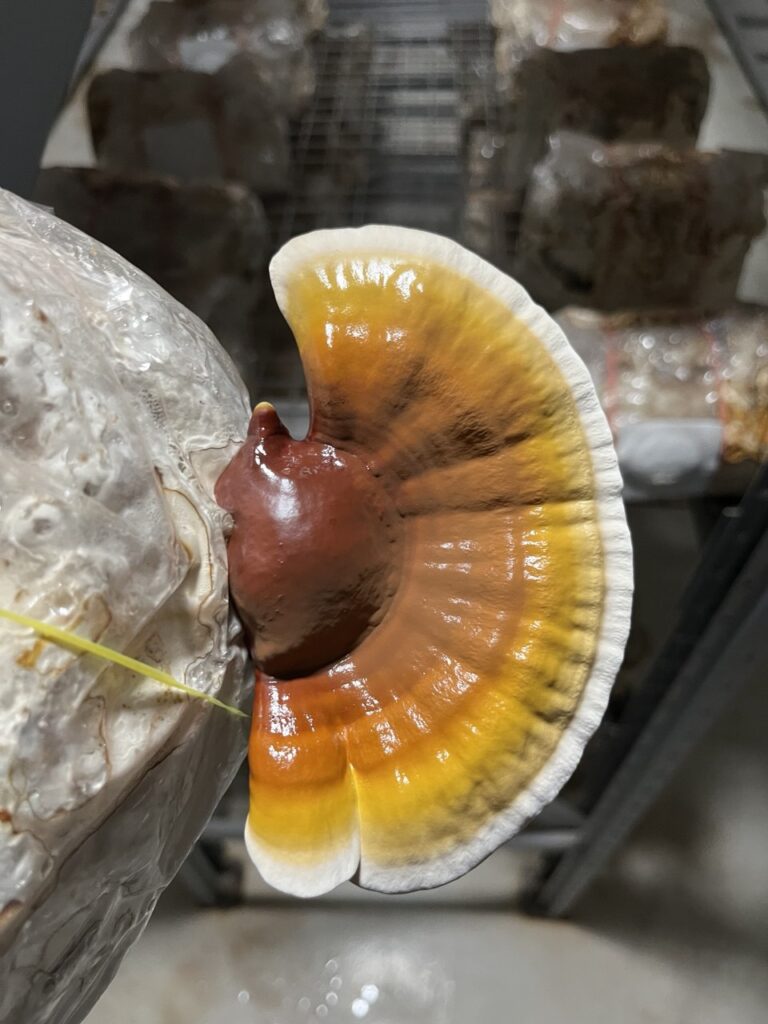
Ganoderma lucidum
Reishi has been revered in East Asian traditions for centuries. Its distinctive shape, hard texture and bitter taste are part of what makes this mushroom so recognisable.
Modern research has focused on several groups of compounds found in Reishi, particularly beta-glucans, polysaccharides, triterpenes and phenolic compounds.
These compounds have been studied for a range of biological activities, including antioxidant and immune-related effects. Their presence and concentration can vary depending on the species, strain, growing conditions and how the mushroom is processed.
What’s inside?
- Beta-glucans
- Terpenes
- Phenolic compounds
Why extraction matters
Not every compound in a mushroom behaves the same way during extraction.
Polysaccharides and triterpenes, for example, have different chemical properties and extraction requirements. The choice of solvent, temperature and process can influence the compounds recovered from the mushroom.
That is why extraction is more than simply making a mushroom soluble.
The Nuvedo approach
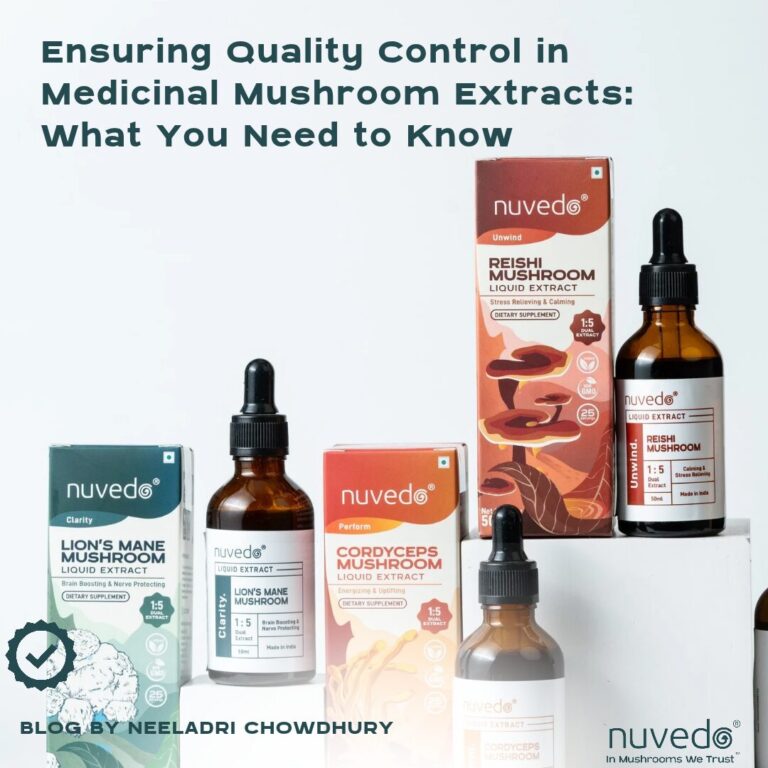
Our Reishi extracts are made using a combination of water-based extraction, pharmaceutical-grade ethanol and ultrasound-assisted processing.
This approach allows us to work with different classes of naturally occurring compounds in the mushroom. The extract is then concentrated and formulated into a convenient liquid.
We focus on the process, the raw material and the final product, rather than relying on the name of the mushroom alone.
Read the science
Ma et al. “Optimization for the extraction of polysaccharides from Ganoderma lucidum and their antioxidant and antiproliferative activities.” Journal of the Taiwan Institute of Chemical Engineers (2013).
DOI: 10.1016/j.jtice.2013.01.032
Alzorqi et al. “Optimization of ultrasound assisted extraction (UAE) of β-d-glucan polysaccharides from Ganoderma lucidum for prospective scale-up.” Resource-Efficient Technologies (2017).
DOI: 10.1016/j.reffit.2016.12.006
Oludemi et al. “Extraction of triterpenoids and phenolic compounds from Ganoderma lucidum: optimization study using the response surface methodology.” Food & Function (2018).
DOI: 10.1039/C7FO01601H
Zheng et al. “Optimization of ultrasonic-assisted extraction of polysaccharides and triterpenoids from the medicinal mushroom Ganoderma lucidum and evaluation of their in vitro antioxidant capacities.” PLoS One (2020).
DOI: 10.1371/journal.pone.0244749
Cordyceps
The mushroom of energy metabolism.
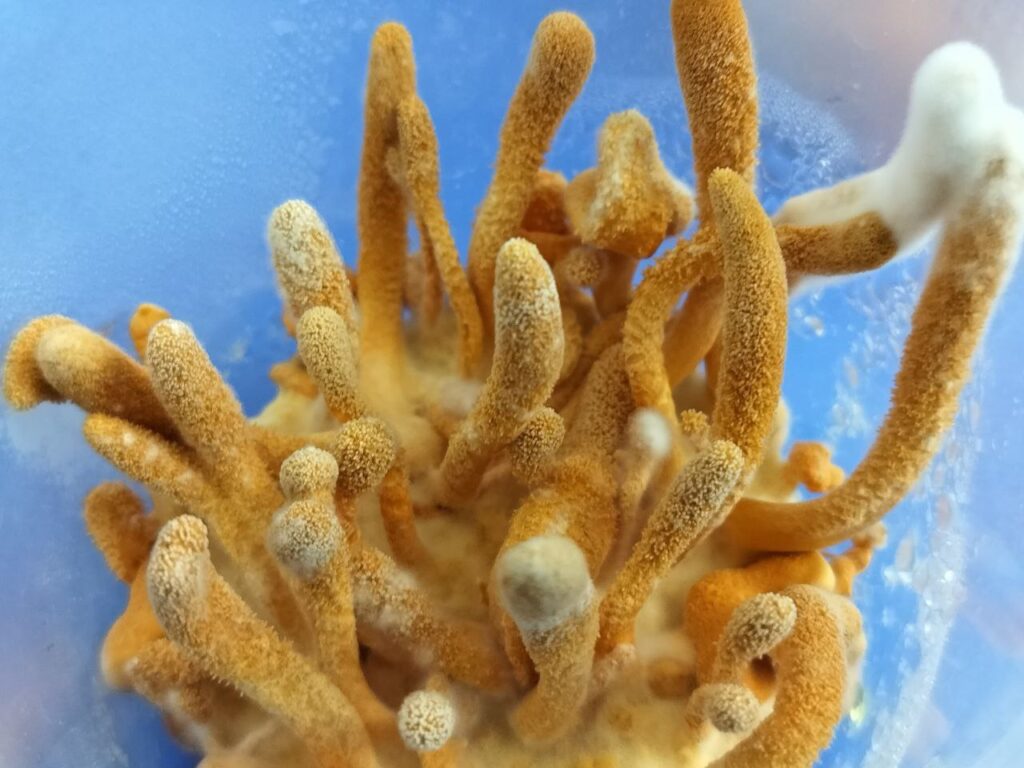
Cordyceps militaris
Cordyceps is one of the most unusual groups of fungi. In nature, many Cordyceps relatives are entomopathogenic, meaning they live in association with insects. Today, species such as Cordyceps militaris are also cultivated for food, research and functional mushroom products.
One of its best-known compounds is cordycepin, a nucleoside analogue that has been studied for its effects on cellular pathways and metabolism.
Research into Cordyceps has also explored its potential relationship with energy metabolism, exercise performance and oxygen utilisation. These areas remain under investigation, and findings from laboratory and animal studies cannot automatically be applied to people taking Cordyceps supplements.
What’s inside?
- Cordycepin
- Adenosine
- Polysaccharides
- Other naturally occurring fungal metabolites
Why cultivation matters
The species, strain and growing conditions can influence the compounds found in cultivated Cordyceps.
For us, that makes cultivation an important part of the extraction process. Understanding the mushroom begins long before it enters the extraction vessel.
The Nuvedo approach
We cultivate Cordyceps in India and use ultrasound-assisted extraction to recover compounds from the fruiting body.
Our aim is to produce a consistent, concentrated liquid extract from carefully cultivated mushrooms, with attention to the raw material and the process used to extract it.
Read the science
Song et al. “Optimization of cordycepin extraction from cultured Cordyceps militaris by HPLC-DAD coupled with uniform design.” Journal of Chemical Technology and Biotechnology (2007).
DOI: 10.1002/jctb.1784
Wang et al. “Optimization of Ultrasonic-Assisted Extraction of Cordycepin from Cordyceps militaris Using Orthogonal Experimental Design.” Molecules (2014).
DOI: 10.3390/molecules191220808
From mushroom to extract
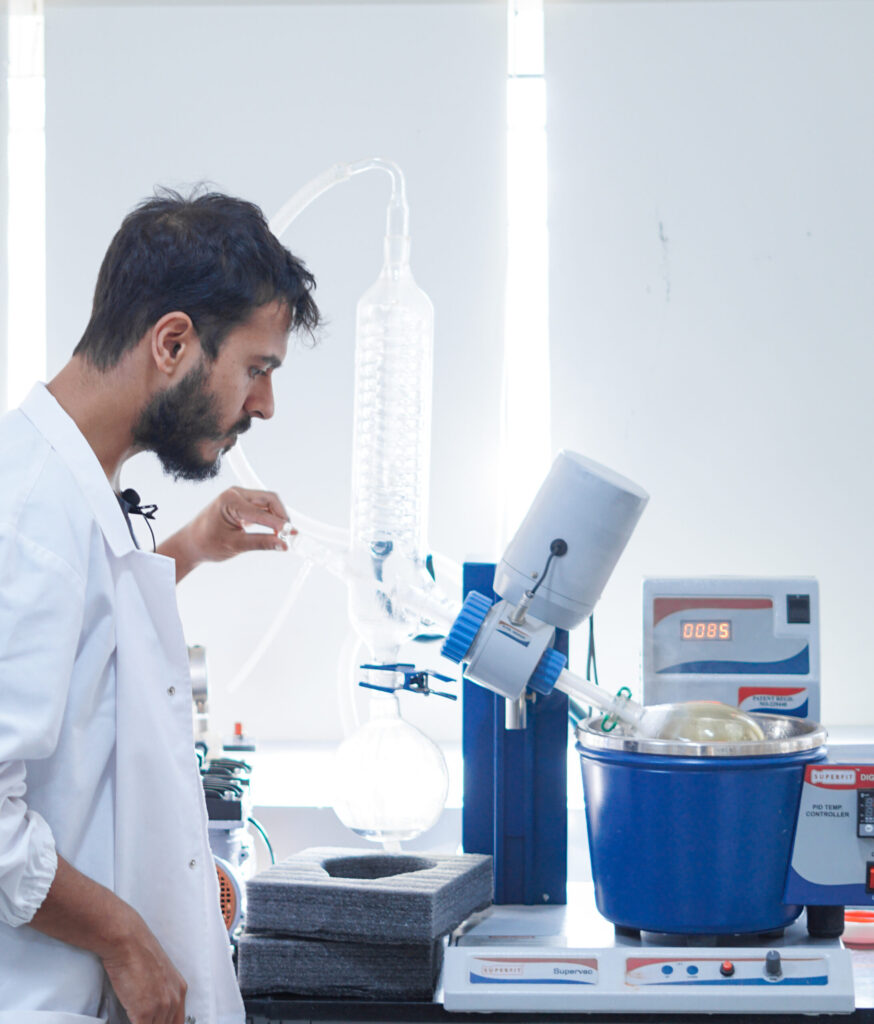
What goes into the process matters.
A mushroom extract is shaped by more than its species name.
The strain, cultivation conditions, part of the mushroom used, extraction method and concentration process all contribute to the final product.
At Nuvedo, we work across the process:
Culture → Cultivation → Extraction → Formulation
We grow our own mushrooms in India, work with selected cultures and use ultrasound-assisted extraction alongside water and pharmaceutical-grade ethanol where appropriate.
Our fruiting-body extracts contain no added grain fillers or mycelial biomass.
We believe in knowing the mushroom, understanding the process and being clear about what ends up in the bottle.